
Walker County Arrest Records and Charges
Walker County arrest records are not the same as court charge records. The arrest record is tied to the law-enforcement event, custody path, and jail or detention information. The Sheriff's Office is the official local source for custody information, and the research found a phone-based Automated Inmate Information System rather than a public searchable jail roster page. The court charge record begins when the offense is filed, prosecuted, or tracked in court. It can show an O.C.G.A. offense line, charge description, bond, arraignment, plea, amendment, dismissal, disposition, or sentence.
The sheriff's records and the court's records overlap but do not replace each other. The Walker County Sheriff's Office website lists divisions including Administrative, Court Services, Detectives, Detention, Drug Task Force, Special Operations, Training, and Uniform Patrol. The administrative division page names Sheriff Steve Wilson and Chief Deputy Major Mike Freeman. Once charges move to court, felony matters involve the Lookout Mountain Judicial Circuit District Attorney and Superior Court, while State Court misdemeanors may involve Solicitor Matt Williamson. Full case-file outcomes belong on the Walker County criminal court records page.
Find Walker County Arrest Records
There is no official Walker County public mugshot or roster database in the research. Custody information is accessed through the Sheriff's Office AIS phone path. The AIS page instructs users to call 706-638-1909, press 3 for Detention, then press 1 for the Automated Information System. A lookup on a specific inmate requires either the inmate's last name or date of birth. The same phone system can provide non-inmate information about funding accounts, scheduling video visits, or obtaining released inmate property.
- For current custody, call the Sheriff's Office at 706-638-1909 and use the Detention and AIS menu path.
- For arrest or search warrants, first appearances, committal hearings, and bail questions, contact Magistrate Court.
- For felony charges after arrest, check Superior Court and the Lookout Mountain Judicial Circuit District Attorney channel.
- For misdemeanor charges, many State Court matters involve the Walker State Court and solicitor channel.
- For a final case outcome, request the court case file or docket from the court that handled the charge.
The Sheriff administrative division page is assigned to the arrest and charge records image set.
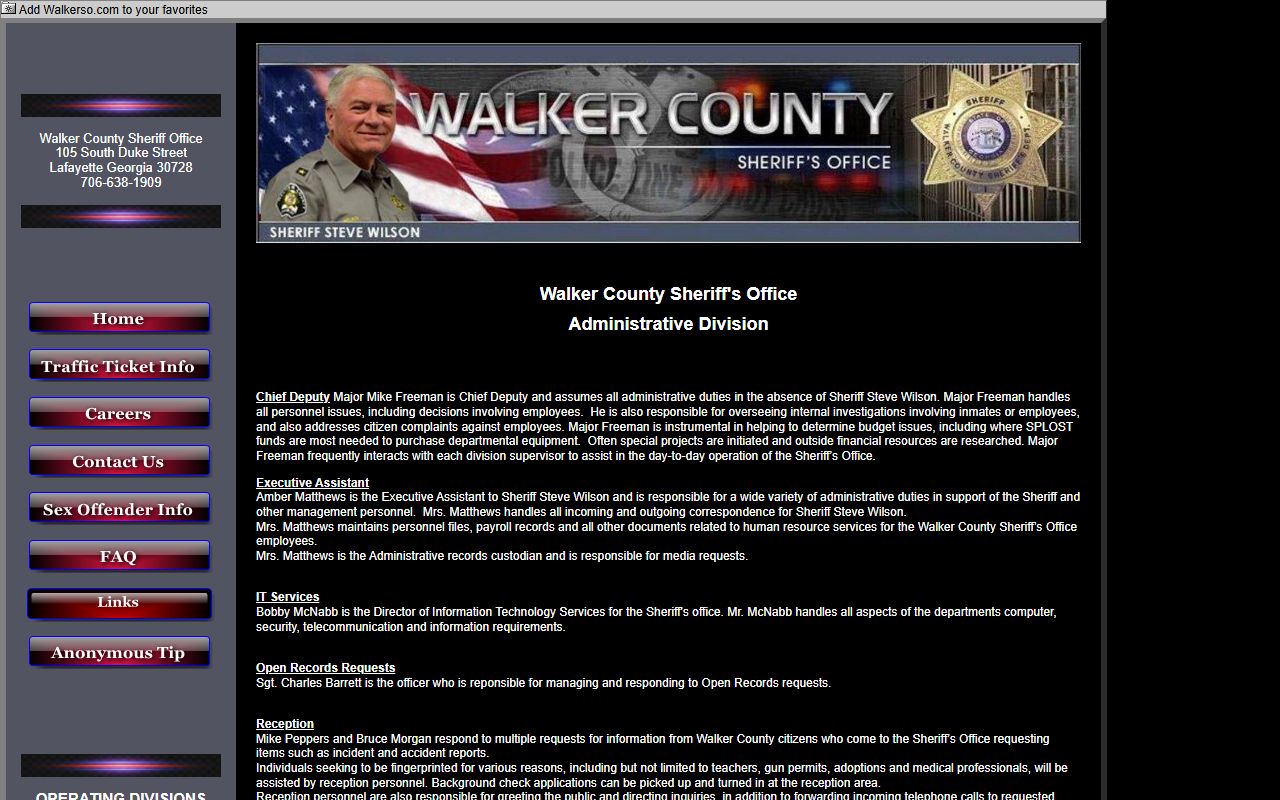
That source supports the sheriff-side portion of the arrest path, while filed court charges must be verified with the appropriate court or prosecutor channel.
Charges After Arrest in Walker County
Charges after arrest become court records when the prosecutor files or pursues the offense through a charging document or court filing. The research identifies indictment and accusation as key criminal record terms. An indictment is a felony charging document returned by a grand jury. An accusation is a prosecutor charging document. A complaint or warrant-based filing may also appear early in a case, especially around Magistrate Court first appearances, warrants, preliminary hearings, and bond. The charge line may include an O.C.G.A. section, offense description, severity, bond amount, and later status.
| Document | Who Creates It | Walker County Use | What It Shows |
|---|---|---|---|
| Complaint or Warrant Filing | Law enforcement or court process | Often appears around warrant, first-appearance, or preliminary stages in Magistrate Court. | Alleged offense, person named, issuing court, warrant or case reference, and bond or custody context where available. |
| Accusation | Prosecutor | Used as a prosecutor charging document in criminal court records. | Filed charge, O.C.G.A. section or offense wording, defendant, court, and later amendments. |
| Indictment | Grand jury | Important for felony prosecutions in Superior Court. | Felony charge returned by the grand jury, counts, defendant, and case filing details. |
The Walker County Magistrate Court page is an assigned source image for arrest and charge records.
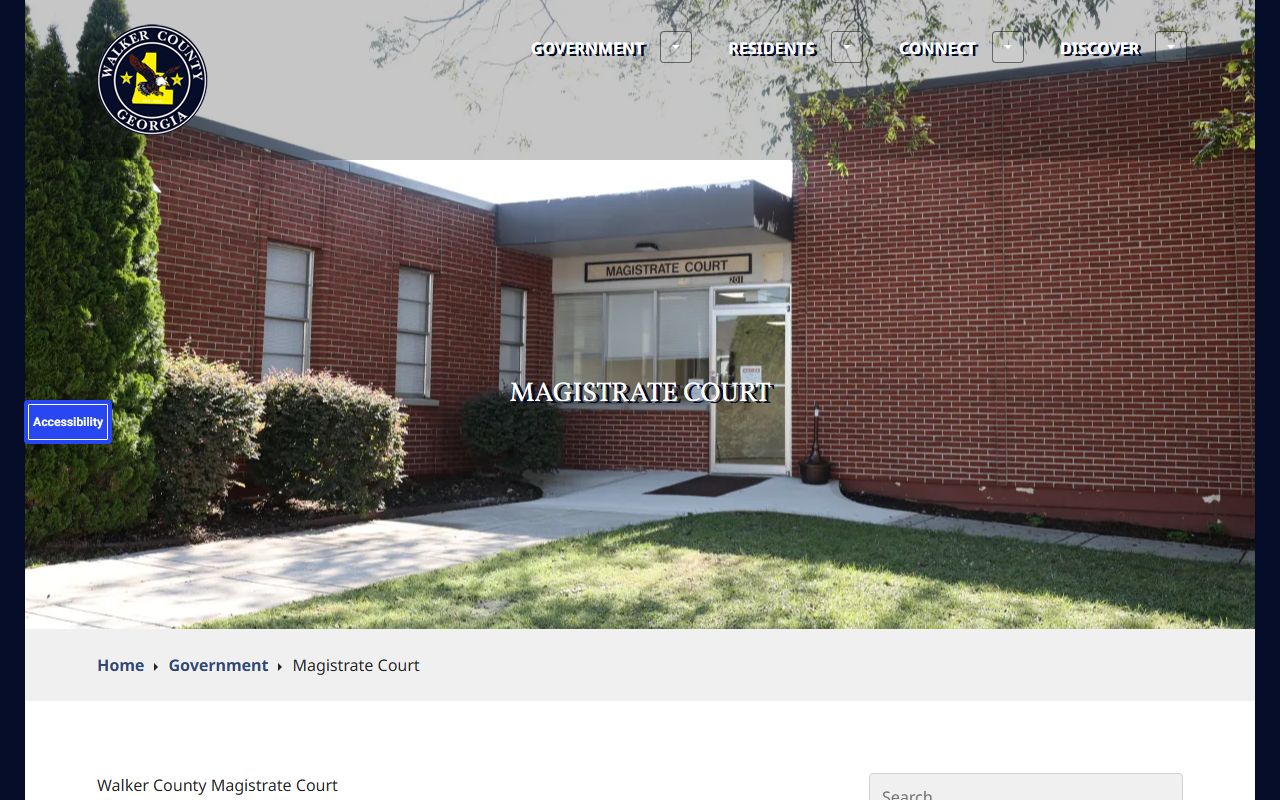
Magistrate Court matters because the official jurisdiction list includes arrest and search warrants, first appearances, committal hearings, and bail.
Walker County Charge Status
A charge may change as the case moves through court. A filed offense can remain pending, be amended, be reduced, be added to, be dismissed, or end in a final disposition. The sheriff's preset bond schedule shows how charges may be listed by O.C.G.A. offense, description, and bond amount, but it is not the same as a final judgment. Examples in the research include simple assault, simple battery, obstruction, VGCSA ounce or less of marijuana, driving without license, suspended license, no proof of insurance, reckless driving, and DUI.
| Status | What It Means | Where to Verify |
|---|---|---|
| Pending | The charge has not reached a final court outcome. | Court docket, clerk record, or court calendar. |
| Amended | The wording, count, or statutory charge changed during prosecution. | Charging document, amended accusation, indictment, or docket entry. |
| Reduced | The offense level or charge was lowered as part of case handling. | Plea entry, disposition, or amended charge record. |
| Dismissed | The charge did not continue to conviction in that case path. | Disposition entry or order. |
| Nolle Prosequi | The prosecutor does not proceed on the charge. | Court disposition or prosecutor/court record. |
| Convicted | The case ended in a guilty result by plea or verdict. | Judgment, sentence, and disposition entries. |
Charge vs Conviction Comparison
A Walker County charge after arrest is an allegation filed into the court process. A conviction is a court outcome. One arrest can produce several charge lines, and each charge can end differently. One count may be dismissed while another count results in a plea. A bond schedule can show an offense and bond amount without proving guilt, while a sentence entry follows a conviction or accepted plea.
| Point | Charge | Conviction |
|---|---|---|
| Record Stage | Appears after arrest or filing. | Appears at disposition and sentencing. |
| Meaning | Alleged offense or count. | Final guilty result by plea or verdict. |
| Can Change? | Yes, it may be amended, reduced, dropped, or dismissed. | Changes usually require later court action or appeal process. |
| Best Proof | Charging document and docket. | Judgment, sentence, and final disposition. |
O.C.G.A. Charge Lines and Bonds
The sheriff's 2024 misdemeanor preset bond schedule is the strongest local charge-source document found in the research. It lists charges by O.C.G.A., description, and bond amount. The schedule includes traffic and non-traffic examples, such as failure to maintain lane, reckless driving, DUI, open container, driving without license, suspended license, no proof of insurance, simple assault, simple battery, obstruction, and marijuana possession at the listed amount threshold. Those entries are charge-level bond references, not final fines, points, or convictions.
Bond is a security or promise allowing release. A surety may guarantee a bond, and a cash bond uses money posted for release. Magistrate Court is important because the official jurisdiction list includes bail in all cases where setting bail is not exclusively committed to another court. If an arrest leads to custody, the Sheriff's Office AIS path can help confirm custody and account or visit information, but the issuing court should verify bond, charge, warrant, and first-appearance status.
Statewide Criminal History Checks
Statewide criminal-history information is different from the Walker County court charge record. The GBI criminal history FAQ addresses statewide criminal history record information. The GBI record restriction page explains O.C.G.A. 35-3-37, including the difference between arrests before and after July 1, 2013 for restriction procedure. A statewide record may help identify criminal-history status, but the court that handled the charge remains the source for the docket, disposition, sentence, and certified court copies.
Note: A statewide criminal-history result should be checked against the court file before drawing conclusions about a charge outcome.
Sealed vs Expunged Charge Records
Georgia research uses record restriction rather than promising expungement as record destruction. For Walker County arrest records and court charges, the practical comparison is a sealed court file versus an eligible criminal-history restriction. O.C.G.A. 35-3-37 can restrict eligible criminal history records for non-criminal-justice purposes when approved. For post-July 1, 2013 arrests, GBI says the person must contact the prosecutor. For pre-July 1, 2013 arrests, the applicant uses the GBI request instructions and applies at the arresting agency. A court-file seal may require a separate court petition and order.
| Point | Sealed | Expunged / Restricted in Georgia |
|---|---|---|
| Primary Effect | Removes a court file from ordinary public access. | Limits eligible criminal-history access for non-criminal-justice purposes rather than proving all records were destroyed. |
| Where It Starts | The court that holds the file. | Prosecutor or arresting agency depending on arrest date. |
| Public View | May require court authorization to inspect. | May not appear for certain non-criminal-justice uses. |
| Limits | Does not mean every agency record is gone. | Does not necessarily destroy every court or agency record. |
Restricted Walker Charge Records
Juvenile charges, sealed matters, protected victim or witness information, active investigative search warrants, mental health records, Social Security numbers, financial account numbers, health information, and minor identifying information may be withheld or redacted. Adoption records are confidential and should not be treated as public charge records. If a charge is tied to a municipal matter, the city court may be the correct place to verify status. If it is tied to a felony, Superior Court and the District Attorney channel are more likely to matter.
For records that are not online, use the correct custodian instead of third-party sites. Magistrate Court handles warrants, first appearances, committal hearings, and bail issues. The Clerk of Superior Court handles Superior, State, and Juvenile court records. The Sheriff's Office handles custody information through AIS. NextRequest is useful for county agency public records, but it is not a replacement for the court clerk's case file.