
How to Search Walker County Court Records
Walker County court records do not sit in one county-branded database. The official courts landing page points users to Magistrate Court, Probate Court, the Lookout Mountain Judicial Circuit, Juvenile Court, State Court, and the Clerk of Superior Court. Superior, State, and Juvenile court records route through the Clerk of Superior Court, while Probate Court keeps marriage, estate, will, guardianship, conservatorship, and weapons carry records. Magistrate Court is the local starting point for warrants, first appearances, bail, dispossessory cases, garnishments, and smaller civil claims.
The statewide Georgia Courts e-access page says users are redirected to a provider website and must have an account to search court records. The Lookout Mountain Judicial Circuit Walker County page is the practical hub for Superior Court, State Court, Juvenile Court, calendars, local rules, standing orders, PeachCourt login, the District Attorney, the Public Defender, Drug Court, and Wellness Court. If a record is old, sealed, unclear, or not in an online index, the fallback is the office counter or the Walker County NextRequest portal for county agency records.
- Identify the court from the case type. Felonies, divorce, equity, title-to-land, and major civil matters usually belong to Superior Court.
- Use the Clerk of Superior Court for Superior, State, and Juvenile record questions, or use the LMJC page for calendars and circuit resources.
- Use Georgia Probate Records for searchable marriage, estate, will, and guardianship modules when Walker County appears as a participating option.
- Contact Magistrate Court for warrants, first appearances, bail, dispossessory actions, garnishment, and civil claims up to $15,000.
- Request certified copies from the court office that holds the file, since online results may not be certified court documents.
The Walker County open-records portal is useful for non-court agency records and prior public requests. The NextRequest landing page lets users search prior requests, review responsive documents, and start a new request when a county agency record is not already available.
| Field | Type | Use |
|---|---|---|
| Search | Text search | Looks through prior public requests and responsive documents. |
| Make Request | Button/link | Starts a new public records request. |
| Request description | Text area | Describes the record needed after the request session begins. |
| Contact information | Web form fields | Identifies the requester so the county can respond. |
The Walker County open-records portal shows how county agency records are requested outside the clerk counter.
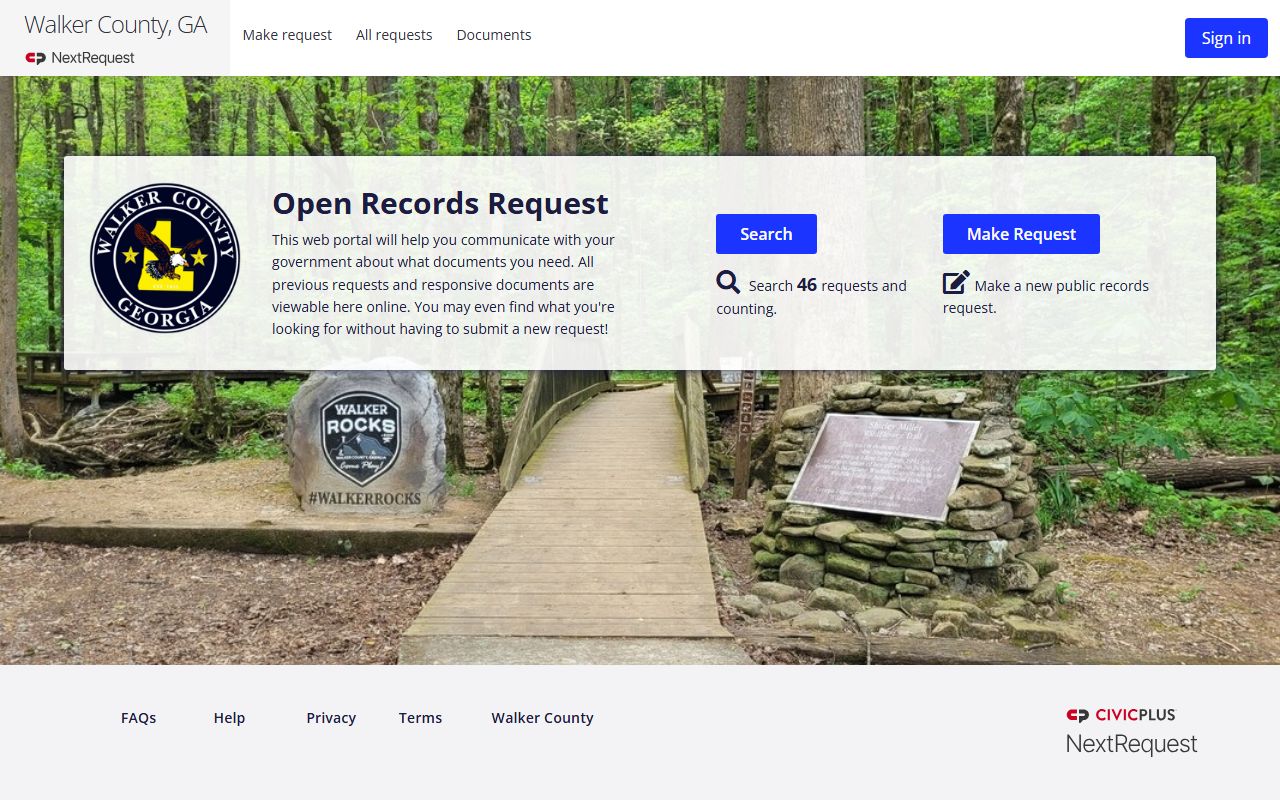
That request route helps when a record belongs to a county department rather than a court file held by the Clerk of Superior Court, Probate Court, or Magistrate Court.
The Walker County Judicial System
Georgia trial courts are not called district courts. Walker County uses Superior Court as the general-jurisdiction trial court, with State Court, Magistrate Court, Probate Court, Juvenile Court, and municipal courts handling narrower case types. Walker County belongs to the Lookout Mountain Judicial Circuit with Catoosa, Chattooga, and Dade Counties. Superior Court is the main venue for felony cases, divorce, equity, title-to-land disputes, major civil matters, and jury trials.
State Court handles many misdemeanors, traffic matters, and civil cases within its statutory role. The Walker State Court page identifies Judge Billy Mullinax and Solicitor Matt Williamson. Magistrate Court is important early in criminal cases because it issues arrest and search warrants, handles first appearances, holds preliminary or committal hearings, and addresses bail when jurisdiction is not exclusive elsewhere. Probate Court is separate and is led locally by Judge Christy Anderson.
Case flow: Magistrate first appearance › Superior or State Court filing › arraignment › motions and hearings › plea, trial, judgment, or sentence › Georgia Court of Appeals or Supreme Court of Georgia when appeal rules allow.
| Court | Local contact | Record scope |
|---|---|---|
| Superior Court / LMJC | Clerk Carter Brown for records | Felonies, divorce, equity, title to land, major civil, jury trials. |
| State Court | Judge Billy Mullinax and Solicitor Matt Williamson | Misdemeanor and traffic/citation matters. |
| Magistrate Court | Chief Magistrate Judge Shelia Thompson | Warrants, first appearances, bail, civil claims up to $15,000, dispossessory, garnishment. |
| Probate Court | Judge Christy Anderson | Estates, wills, guardianships, conservatorships, marriage licenses, weapons carry licenses. |
| Municipal Courts | City-specific courts | City ordinance and municipal traffic matters. |
The LMJC Walker County hub is the circuit page that ties many Walker County court record paths together.
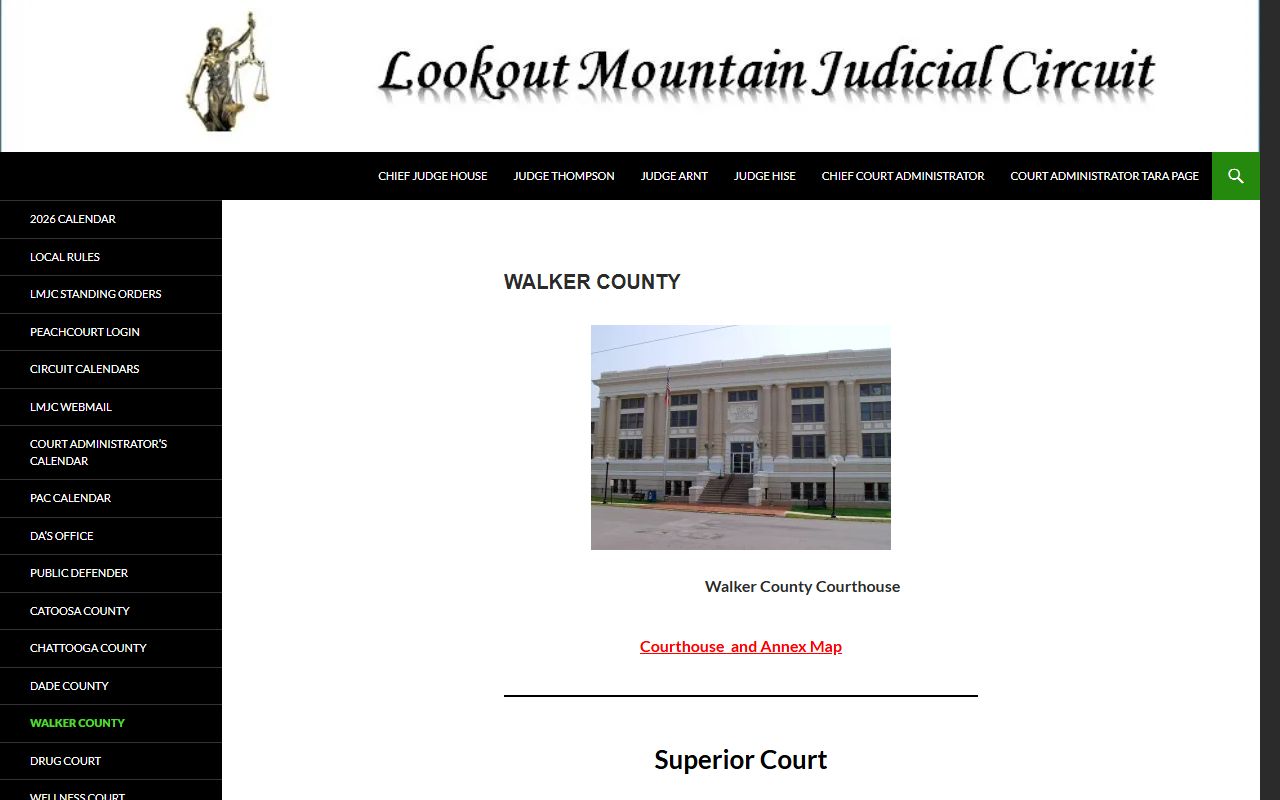
Its mix of calendars, local rules, clerk links, and specialty court links is why docket searches often start there instead of on a county search box.
Walker County Courthouse Offices
Walker County court records are centered on Duke Street in LaFayette, but the offices are not one counter. The historic courthouse holds the Clerk of Superior Court and Probate Court functions, while Magistrate Court is nearby at a separate South Duke Street address. The Sheriff's Office is also on South Duke Street, which matters for jail, bond, warrant arrest, and custody questions. A records visit should start with the office that owns the file.
Walker County Courthouse / Clerk
103 South Duke Street
LaFayette, GA 30728
706-638-1742
Walker County Probate Court
103 S Duke Street, Room 101
LaFayette, GA 30728
706-638-2852
The county contact page also routes deeds, titles, and legal property documents to the Clerk of Courts office.
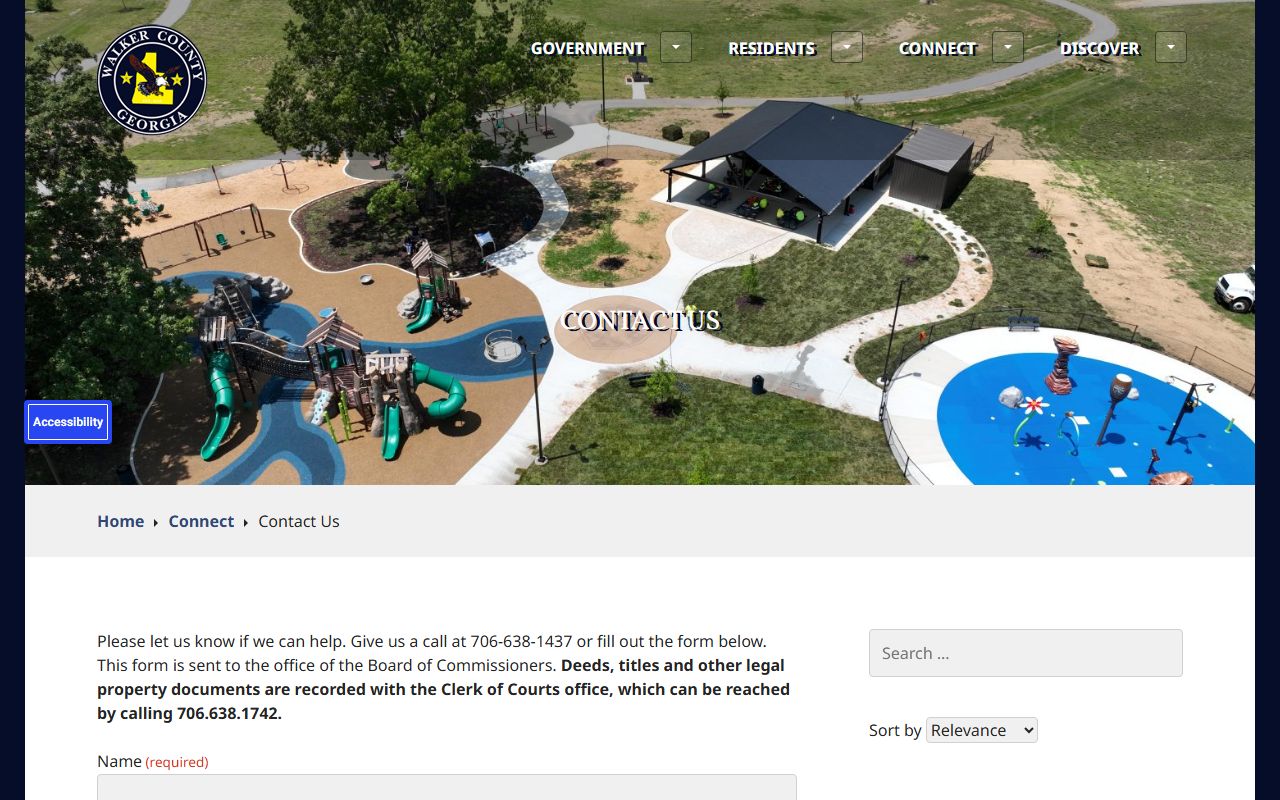
That routing note is useful because county administration, court records, probate records, and sheriff records each use different access channels.
Walker County Court Record Types
Walker County court records include civil, criminal, family, probate, marriage, traffic, warrant, and custody-related records, but each category has a different custodian. Civil matters may be in Superior Court, State Court, or Magistrate Court depending on subject and amount. Criminal files may start with a warrant or first appearance in Magistrate Court, then proceed into Superior Court for felonies or State Court for many misdemeanors and citations.
Family and probate records require careful routing. Divorce files are obtained through the Clerk of Courts because Superior Court has exclusive jurisdiction over divorce. Marriage records are obtained through Probate Court, not the general county records office. Juvenile, adoption, mental health, sealed, and restricted criminal records are not ordinary public files.
- Criminal records include accusations, indictments, pleas, orders, bond entries, dispositions, sentences, and probation terms.
- Civil records include complaints, service papers, answers, motions, hearing notices, judgments, writs, and satisfaction entries.
- Family and divorce records may include complaints, answers, temporary orders, settlement terms, and final decrees.
- Probate records include wills, estates, guardianships, conservatorships, marriage licenses, and weapons carry matters.
- Traffic records may involve State Court, municipal courts, sheriff citation payment instructions, and DDS driver-history records.
What Walker County Court Records Show
A Walker County court record usually combines identifying data, procedural history, and the court's action on the case. LMJC calendar PDFs show Superior Court style case numbers such as 2024-SU-CV-452-BMH. The research supports that as an observed format, not a complete code key. Court records can show parties, case type, filing date, hearing date, presiding judge, docket events, bond, fine, judgment, disposition, sentence, and appeal activity depending on the file.
| Field | What It Shows |
|---|---|
| Case Number | May show year, court abbreviation, case category, sequence, and judge or assignment suffix. |
| Filing Date | Shows when the case, petition, accusation, or related filing entered the court record. |
| Parties | Lists plaintiff and defendant, petitioner and respondent, State of Georgia and defendant, or probate parties. |
| Charges / Cause | Shows the filed offense, claim type, probate matter, traffic citation, or civil cause. |
| Disposition | Shows the outcome, such as dismissal, judgment, plea, verdict, order, or final decree. |
| Sentence / Judgment | Shows punishment, probation, fine, restitution, civil judgment, or probate order when applicable. |
Walker County Court Records Access Laws
Georgia law favors access to public records, but Walker County court records must still be requested from the right custodian. The Georgia Open Records Act applies to public agency records and allows inspection and copying unless an exception applies. Court files are also controlled by court rules and case-specific orders. A public criminal docket may be available while sealed exhibits, juvenile files, adoption matters, mental-health records, and protected personal identifiers are withheld or redacted.
Key Statutes:
O.C.G.A. 50-18-70 - Georgia declares a policy favoring public access to public records unless an exception applies.
O.C.G.A. 50-18-71 - Public records are open for inspection and copying, and agencies may charge lawful fees.
O.C.G.A. 50-18-72 - Confidential, medical, investigative, personal, or legally protected records may be withheld or redacted.
Uniform Superior Court Rule 21 - Superior Court files are public unless access is limited by law or court procedure.
Restricted Walker County Court Records
Not every Walker County court record is open for general search. Juvenile delinquency and dependency matters are restricted. Adoption records are confidential. Probate Court handles some mental-health hospitalizations, but mental-health records are not public court files. Public copies should redact Social Security numbers, financial account numbers, protected health details, minor identifying information, and other sensitive data.
Georgia criminal-history restriction uses O.C.G.A. 35-3-37. The GBI explains that arrests after July 1, 2013 do not use the older application process and require contact with the prosecutor. For earlier arrests, the applicant uses the GBI request form and applies at the arresting agency. Court-file sealing is a separate court process and may require a judge's order.
Walker County Specialty Courts
The Lookout Mountain Judicial Circuit operates specialty programs that can affect Walker County criminal court records. Adult Felony Drug Court serves Catoosa, Chattooga, Dade, and Walker Counties. The official page says the program began in 2017 for non-violent offenders with substance abuse issues. Judge Don W. Thompson is listed, and the program includes court sessions, random drug screens, treatment, employment requirements, and weekly Drug Court fees.
Wellness Court is a voluntary post-adjudication or revocation program for participants whose criminal conduct is linked to mental health issues. The program lasts at least 18 months and includes medication management, treatment, monitoring, and intensive case management. Superior Court Judge Chris Arnt is listed, and Program Director Shawn Parnell is the research contact.
Walker County Sheriff and Jail
The Walker County Sheriff's Office lists its office at 105 South Duke Street in LaFayette and uses 706-638-1909 as the main phone number. The sheriff website names divisions for administration, court services, detectives, detention, drug task force, special operations, training, and uniform patrol. Sheriff Steve Wilson and Chief Deputy Major Mike Freeman are identified in the sheriff's administrative material.
Walker County does not provide a public web jail roster like some counties. The sheriff publishes an Automated Inmate Information System phone path: call 706-638-1909, press 3 for Detention, then press 1 for AIS. The caller needs the inmate's last name or date of birth. Full custody help belongs on Walker County inmate records, while warrant routing belongs on Walker County warrant records.
The Walker County Sheriff's Office homepage is the entry point for jail, bond, traffic citation, and sheriff division information.
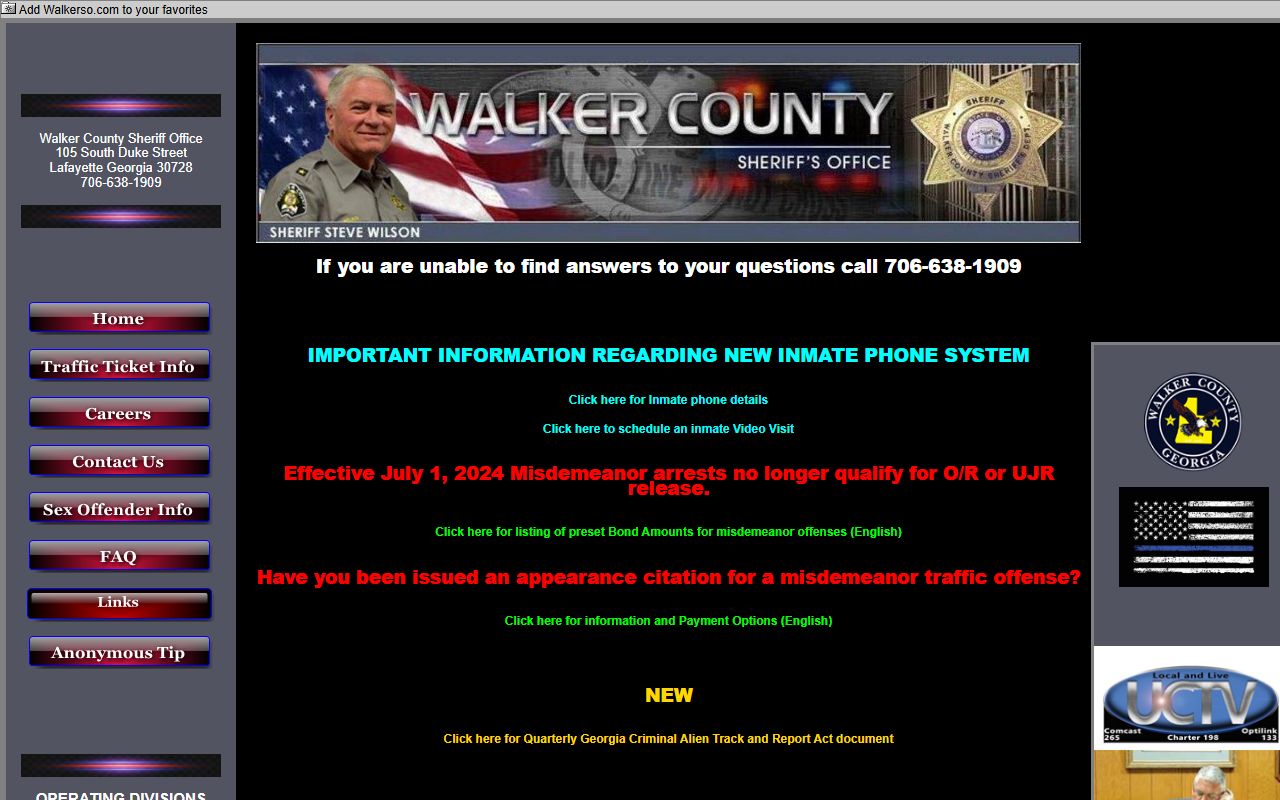
Because the sheriff's AIS is phone-based, online court records and jail custody records should not be treated as the same search.
Walker County Probate and Marriage Records
Marriage and divorce records split between offices. The county records page says marriage records are obtained through Probate Court on the bottom floor of the courthouse, while divorce records are obtained through the Clerk of Courts. Probate Court also handles wills, estates, guardianships, conservatorships, marriage licenses, weapons carry licenses, and some family-related probate matters. More detail is available through Walker County marriage and divorce records and Walker County Probate Court.
- Testator
- A person who made a will.
- Executor
- A person named to carry out a will and manage estate steps.
- Conservator
- A person appointed to manage property or finances for another person.
The GSCCCA Walker County Clerk profile confirms the clerk office, hours, courts managed, and courthouse contact route.
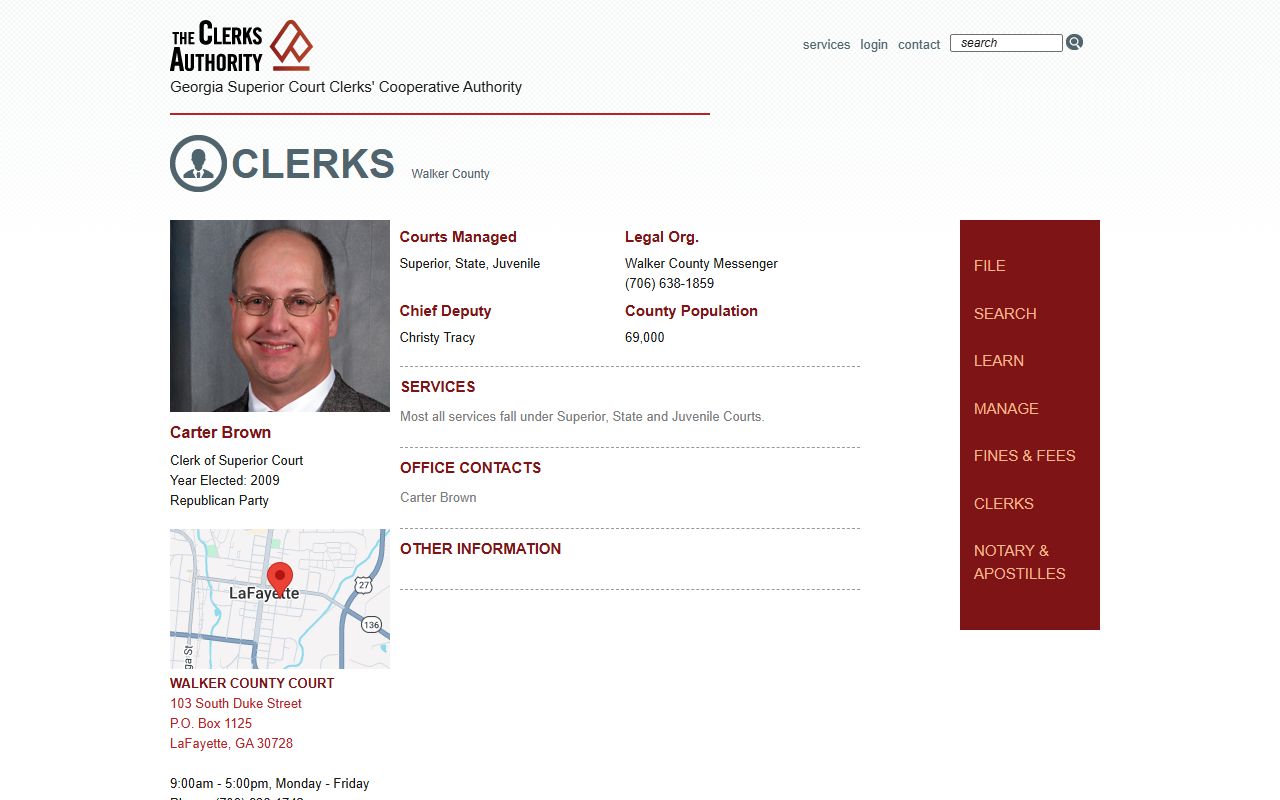
That clerk profile prevents a common mistake: asking Probate Court for a divorce decree or asking the Clerk of Courts for a marriage certificate.
Walker County Court Records Fees
Official research located one fixed Walker County record fee: Probate Court's online copy process for a previously issued marriage certificate costs $14 when the requester knows the marriage date and groom's first and last name, with Visa or Mastercard payment. Specific Walker County Clerk plain, certified, and exemplified copy amounts were not located in official sources. The Georgia Open Records Act allows reasonable charges for public-record requests under O.C.G.A. 50-18-71.
| Item | Amount |
|---|---|
| Online marriage certificate copy | $14 |
| Clerk plain copy | Fee not located in official sources |
| Clerk certified copy | Fee not located in official sources |
| Open-records request charges | Reasonable lawful charges allowed by O.C.G.A. 50-18-71 |
Read Walker County Court Records
Several terms appear across Walker County court records. A docket is a chronological list of filings, hearings, and orders. A motion is a written request asking a judge for action. A disposition is the outcome. An indictment is a felony charging document returned by a grand jury, while an accusation is a prosecutor charging document. A charge is not the same as a conviction. A charge shows what was filed; a conviction requires a plea, verdict, or other final criminal outcome.
Probate terms differ from criminal and civil court terms. An estate is the property and obligations of a deceased person. Guardianship concerns care decisions, while conservatorship concerns property or finances. Record restriction is Georgia's process for limiting certain criminal-history access for non-criminal-justice purposes. A sealed record is removed from ordinary public access.
Walker County Record Limits
Walker County court records can lag behind events because calendars, court orders, clerk entries, and outside systems update on different schedules. LMJC's legacy Walker page warns users to refresh the browser if information appears out of date and notes that many calendar documents require Adobe Acrobat. Sheriff custody status is separate from court case status, and GDC offender search is for state prison or probation records, not current county jail custody.
Note: Confirm certified copies, warrant status, hearing dates, and custody status with the office that owns the record.
Walker County Court History
Walker County's official history says the county boundaries were originally set in 1833 from Murray County and land once belonging to the Cherokee people. The county seat developed from Benton and Chattooga, then became LaFayette in 1836. The courthouse was constructed in 1917, and the National Park Service record lists law, politics and government, architecture, economics, and communications among its areas of significance.
The Walker County history page explains the courthouse and county-seat background that still shapes records access.
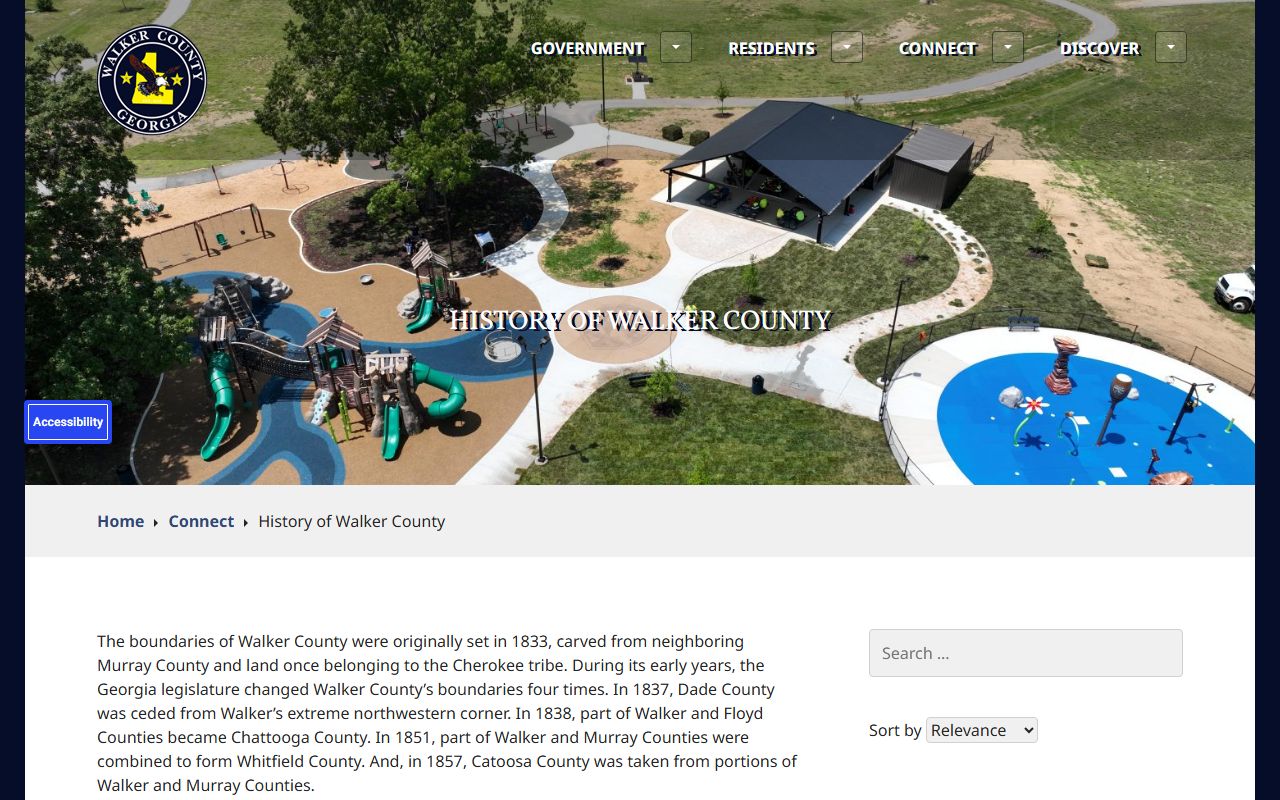
That history matters because the courthouse remains the central place for clerk and probate access even as some records have moved into online portals.
Walker County Court Records FAQ
Where are Walker County divorce records kept?
Divorce records are obtained through the Clerk of Courts at the courthouse because Superior Court handles divorce. Probate Court handles marriage records and licenses, not divorce decrees.
Is there one Walker County court records portal?
No single county portal covers every court record type. LMJC, Georgia Courts e-access, the Clerk of Superior Court, Probate Court, Magistrate Court, and NextRequest each serve different records.
How are Walker County inmate records searched?
The sheriff uses a phone-based Automated Inmate Information System. Call 706-638-1909, press 3 for Detention, then press 1 for AIS, using a last name or date of birth.
Can Walker Transit help with courthouse trips?
Walker Transit is a demand-response service. The published schedule effective September 2, 2025 is Monday through Friday, 6:00 a.m. to 5:00 p.m., and reservations must be made at least one day ahead at 706-375-0803.
The Walker Transit page gives the local transit access details for courthouse trips.
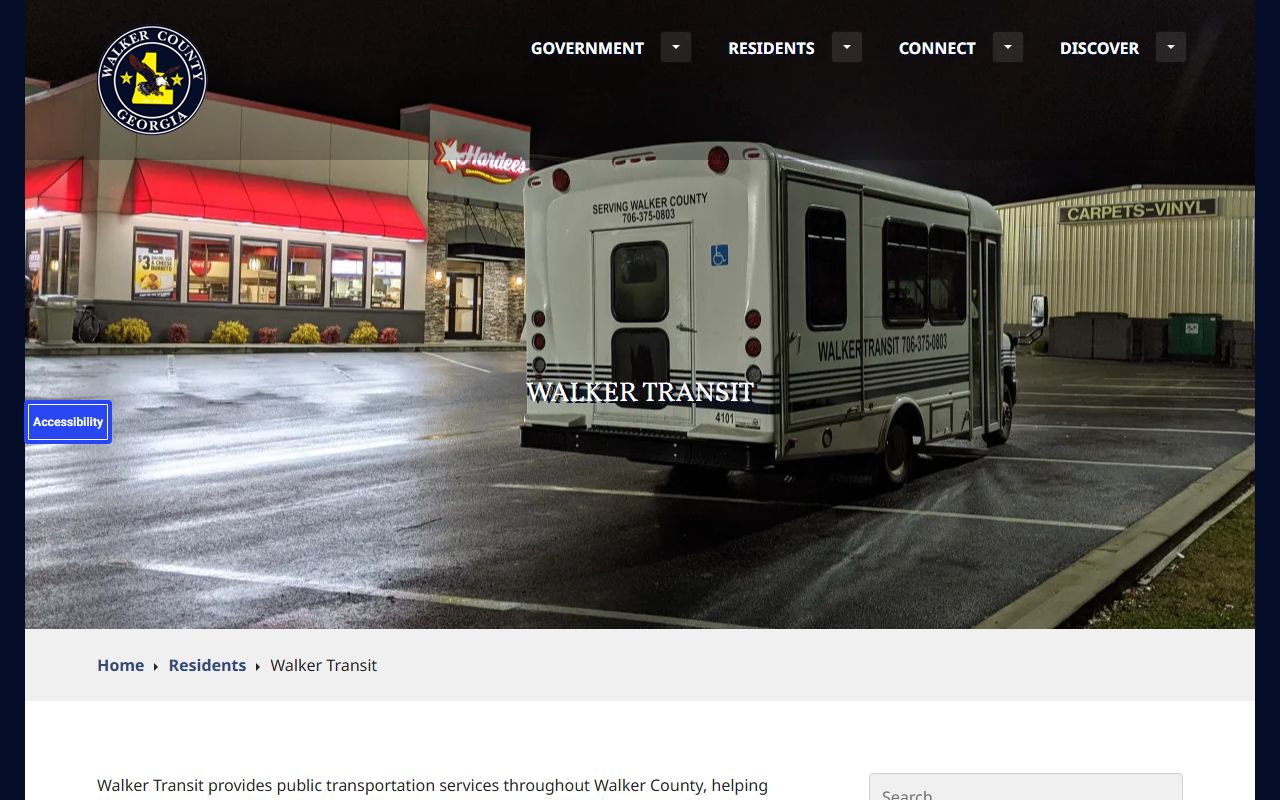
Transit details belong with court access because many record tasks still require an in-person office visit or certified-copy pickup.